Leak in a Roof Valley
A valley is the line where two roof slopes meet. Every drop from both slopes runs down it, so it carries more water than anywhere else on the roof. When the metal rusts, the shingles wear thin, or leaves dam it up, water backs up sideways under the shingles.
Signs people notice
- A ceiling stain that lines up with the crease you can see outside
- Shingle edges in the valley looking worn, bare or lifted
- Rust or holes in the metal down the center of the valley
- Leaves, needles or grit packed along the crease
- Granules washing into the gutter below one valley
- A leak that only shows up in long, heavy rain or after snow
How urgent is it?
Valley leaks soak a lot of decking because the water follows the whole line, not one spot. Get it looked at within a few weeks, sooner if a ceiling is staining or a storm is coming and the leak is active.
What could be causing it
These are the usual suspects. Which one it is on your house is decided by looking at it, not by reading a list.
- Rusted valley metal
- Older roofs often have galvanized metal in the valley. Once it rusts through, water goes straight into the deck below.
- Worn shingles at the crease
- Fast water strips the granules off shingle edges in a valley first. Thin shingles there tear and let water under.
- Debris damming
- Wet leaves and pine needles hold water in place. Water that sits will find a seam and move sideways under the shingles.
- A badly cut valley
- If shingles were cut short, nailed too close to the center, or woven wrong, the valley leaks from day one and gets blamed on the weather.
- Ice and snow backup
- Snow packs into valleys and melts slowly. Water backs up above the ice and finds any seam it can.
- A valley dumping onto a wall or lower roof
- When a valley drains onto a wall, a porch roof or another slope, that landing spot needs flashing too. It is a common miss.
What this looks like
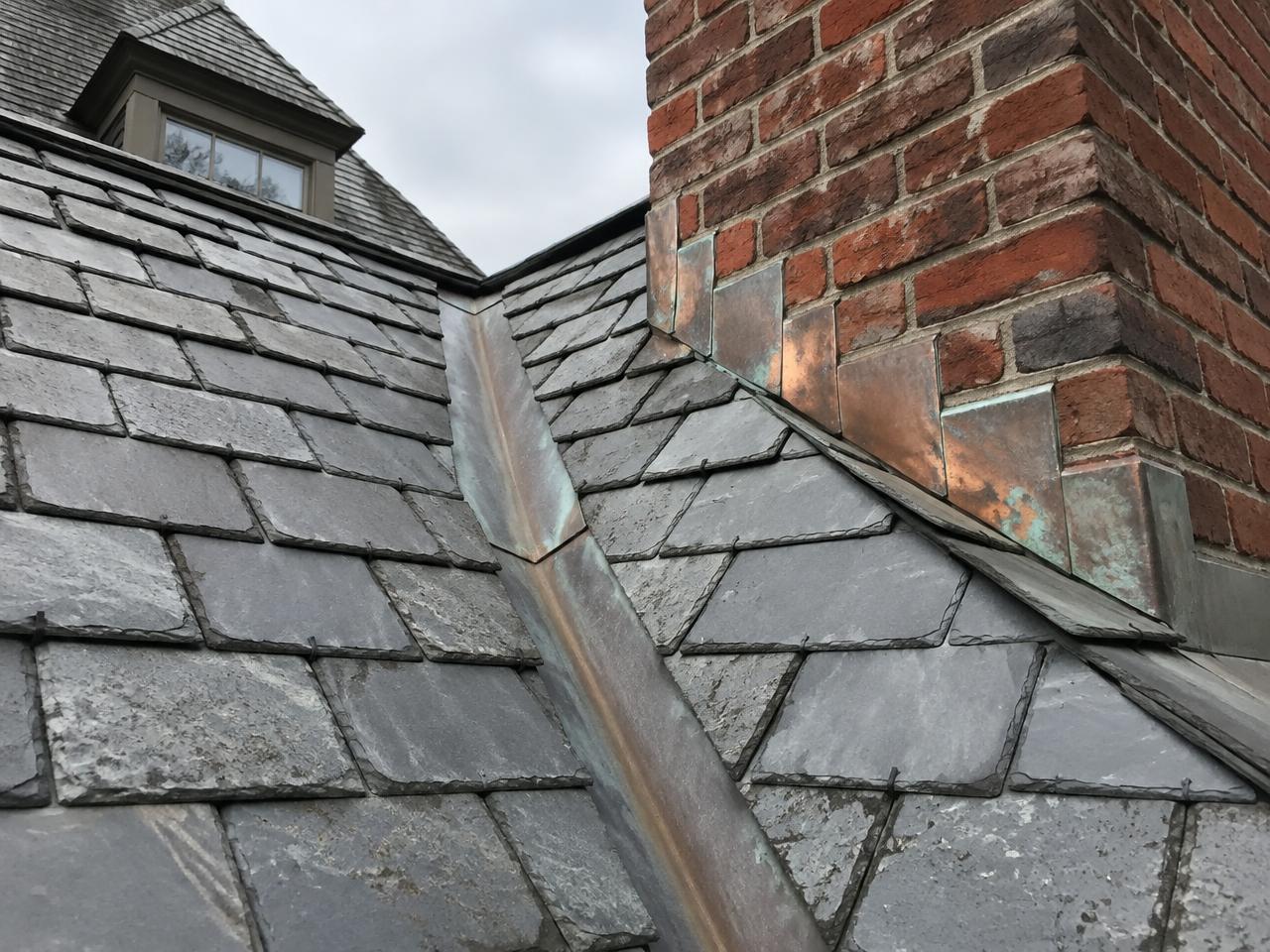
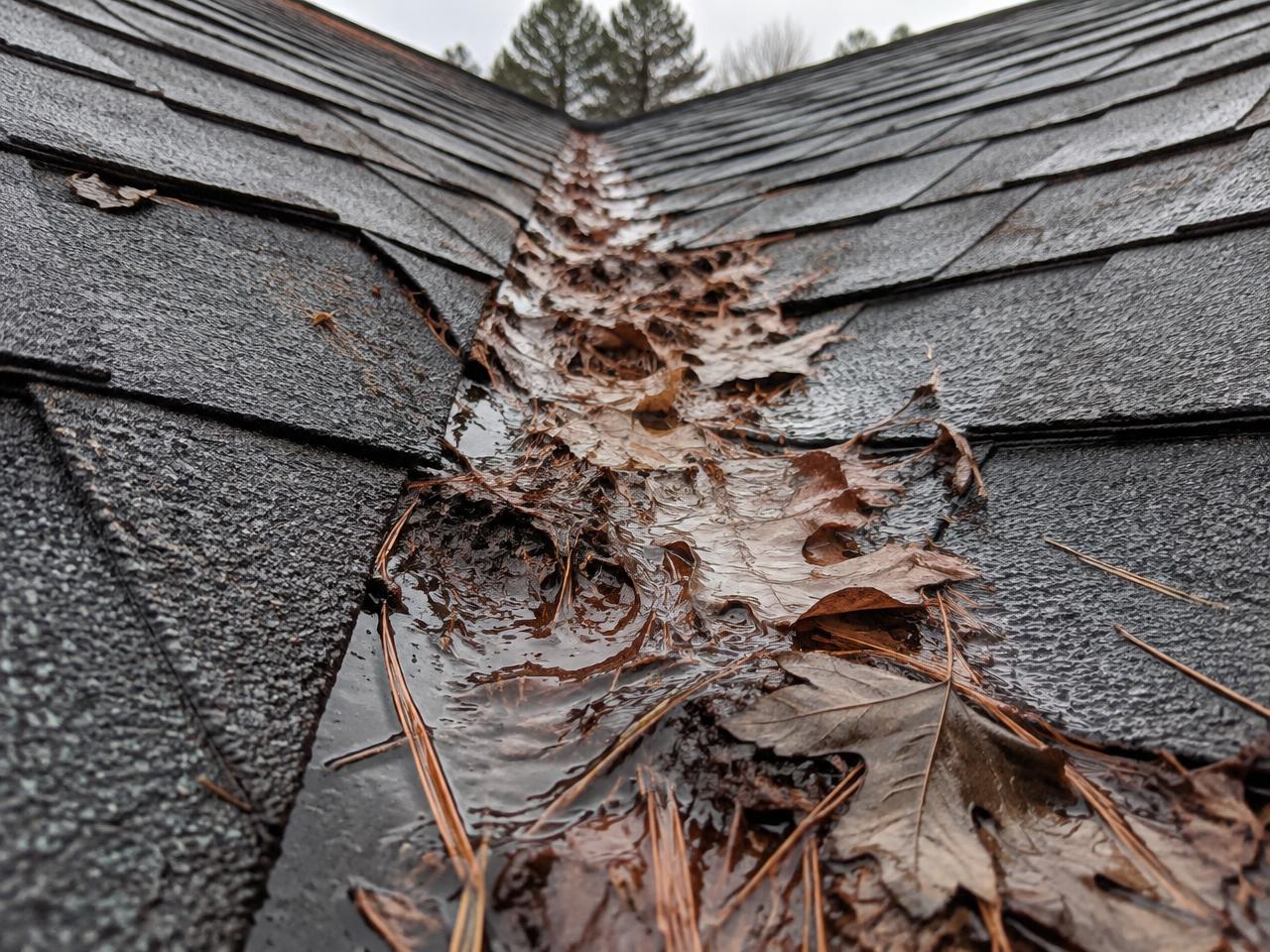
The valley pictures here are examples of the condition and the repair described, not a named customer's roof.
What the inspection checks
- 1. Match the stain to the crease
- Inside stains that line up with a valley are a strong sign, and it tells us which valley to open.
- 2. Attic check
- Wet, dark streaks running down rafters under the valley show how long this has been going on.
- 3. The valley itself
- The metal, the shingle cuts along both sides, the nails near the center, and any debris sitting in the line.
- 4. Where the valley ends
- We follow the water to where it lands: the gutter, a wall, or a lower roof, and check the flashing there.
- 5. Deck condition
- We check for soft wood along the valley, which decides whether this is a patch or a rebuild of that section.
What the repair can involve
- Clear and reseat
- Sometimes the valley is sound and packed with debris. It gets cleared, checked, and the nearby shingles get reset.
- Rebuild the valley
- Shingles come off both sides, new underlayment and new valley metal go in, and the shingles are cut back to the right line and nailed away from the center.
- Replace rotted decking
- Soft plywood or boards along the valley get cut out and replaced before new metal goes down.
- Ice and water protection
- Self-sealing membrane under the valley is standard on a rebuild here, because our winters push water uphill.
- Flash the landing spot
- Where a valley dumps onto a wall or lower roof, that spot gets kick-out or wall flashing so water goes into the gutter instead of the wall.
Repair or replace?
One bad valley on an otherwise decent roof is a repair. When two or three valleys are worn out and the shingles are brittle across the whole roof, rebuilding valleys one at a time costs more over a few years than replacing the roof once.
What changes the price
- How long the valley is and how steep the slopes are
- Whether the metal can be replaced or the whole valley is rebuilt
- How much decking under it has rotted
- Roof material — slate and cedar valleys take much longer than shingle
- Whether the valley lands on a wall that also needs flashing
- Access and safe setup on steep or high sections
We do not post prices we cannot stand behind. The price comes in writing after the roof is looked at.
Questions about roof valley leak repair
- How do I know the leak is the valley and not the chimney?
- Sometimes you cannot tell from inside, because water travels along wood. The inspection follows the water back to the real entry point instead of guessing.
- Can just one valley be fixed?
- Yes. If the rest of the roof is sound, only that valley gets opened and rebuilt.
- Will cleaning the leaves out stop the leak?
- It helps and it is worth doing, but if the metal is rusted through or the shingles are worn at the crease, cleaning alone will not stop it.
- Do valleys need gutter guards?
- Guards help the gutter, not the valley. Keeping tree limbs trimmed back does more for a valley than any guard.
What the visit is like
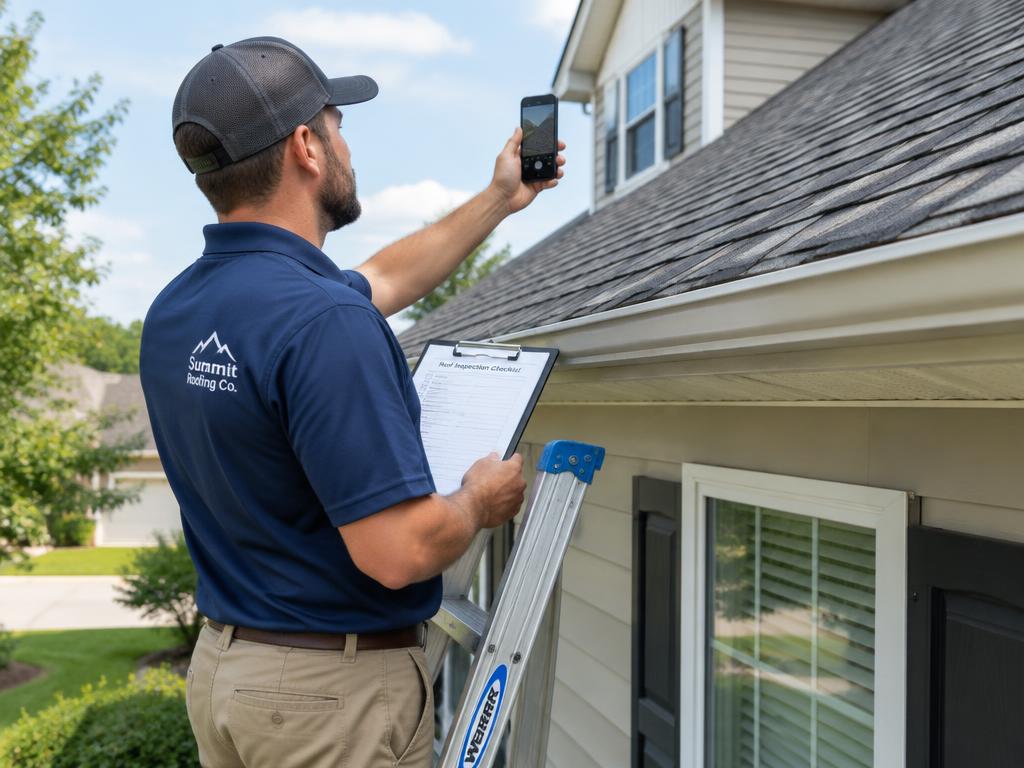

Please be home if you can. The roofer needs attic access when the house has it, and you should hear the findings in person.
More on roof valley leak repair
Straight to the pages that deal with this same part of the roof.
Water Coming In Around Your Chimney?
Another leak point people mix up with roof valley leak repair.
Shingles Missing After the Wind
Another leak point people mix up with roof valley leak repair.
Roof Leak Repair
Service page: Leak Repair
Free Roof Inspection
Service page: Free Inspection
Roof Leaking After Heavy Rain: What To Do Next
Guide
Water Stains On The Ceiling: Roof Leak Or Something Else?
Guide
Have it looked at before the next storm
Free inspection, photos of what we find, and a written price. The estimate request already knows you are asking about roof valley leak repair.
GET A VALLEY LEAK ESTIMATE