Water Coming In Around Your Chimney?
The chimney is the most common leak spot on a roof. It sticks up through the roof, so water has to be steered around it. When the metal or the brickwork stops doing that job, water runs down inside the wall. An inspection tells you which part failed.
Signs people notice
- A stain on the ceiling or wall right next to the chimney
- Wet or crumbling plaster on the chimney breast inside the house
- A damp, musty smell near the fireplace after rain
- White chalky lines or peeling paint on the brick indoors
- Rust streaks on the metal where the roof meets the chimney
- Wet wood or daylight at the chimney when you look in the attic
How urgent is it?
A chimney leak is rarely an emergency in the first storm, but it gets expensive quietly. The water runs through framing, plaster and insulation you cannot see. If plaster is falling, wood is soft, or water shows up every time it rains, get it looked at now instead of in the spring.
What could be causing it
These are the usual suspects. Which one it is on your house is decided by looking at it, not by reading a list.
- Failed step flashing
- Step flashing is the metal that laces between the shingles and the brick, one piece per shingle row. When it rusts, lifts or was never laced in right, water walks straight in.
- Missing or loose counterflashing
- Counterflashing is the top metal that tucks into a mortar joint and covers the step flashing. If someone only caulked it instead of cutting it in, it lets go after a few winters.
- Caulk used as the repair
- A thick bead of black sealant around a chimney is a red flag, not a fix. Caulk shrinks and cracks. Metal is what keeps water out.
- Open mortar joints or spalling brick
- Old mortar washes out and brick faces flake off. Then the brick itself soaks up water and carries it down. That part is masonry work, not roofing.
- A cracked crown or missing cap
- The crown is the concrete top of the chimney. A crack there, or a missing rain cap, lets water pour straight down the inside of the flue.
- No cricket behind a wide chimney
- A wide chimney on a slope needs a small peaked roof behind it, called a cricket, to split the water. Without one, water and leaves pile up behind the brick.
What this looks like
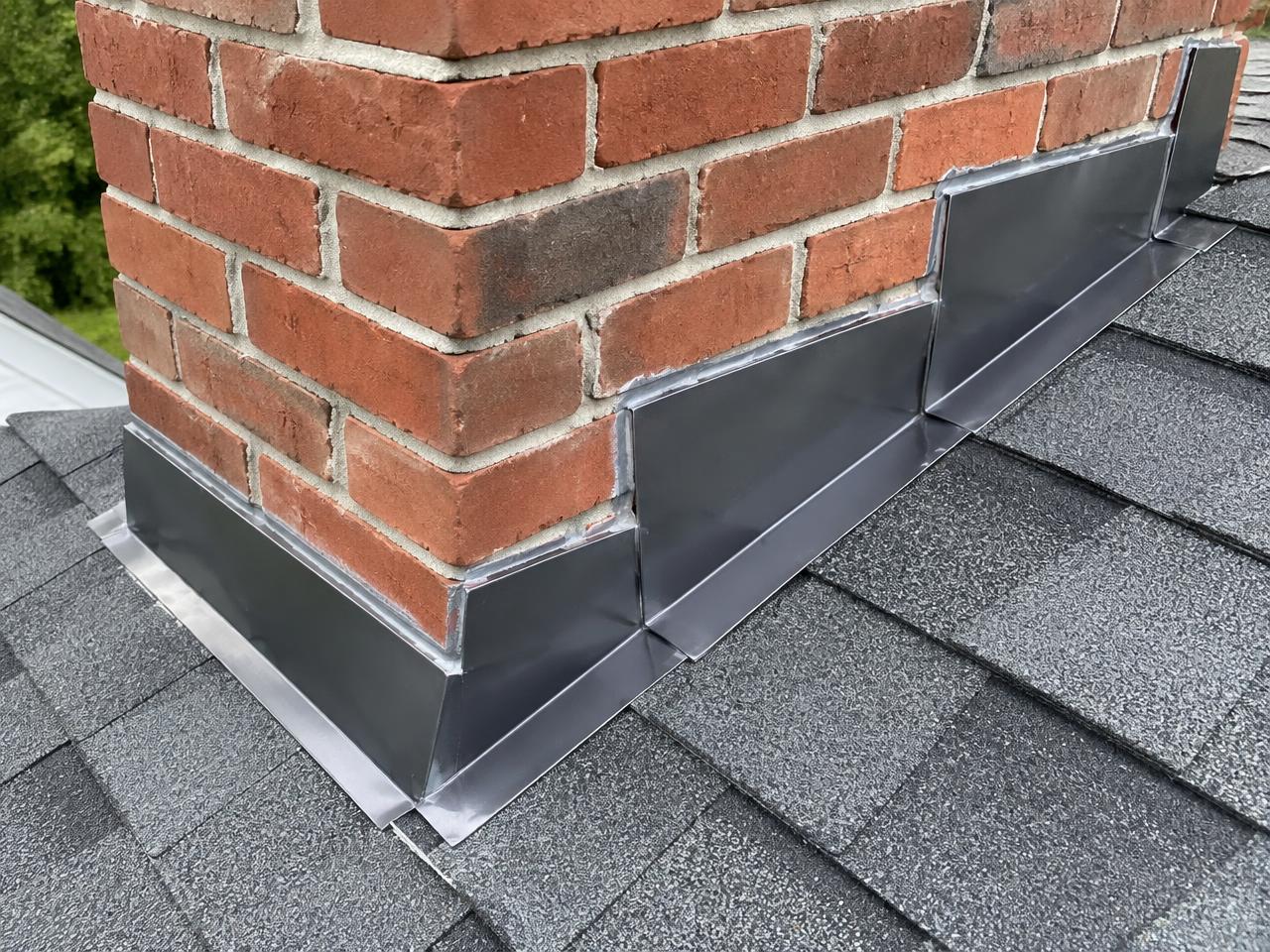
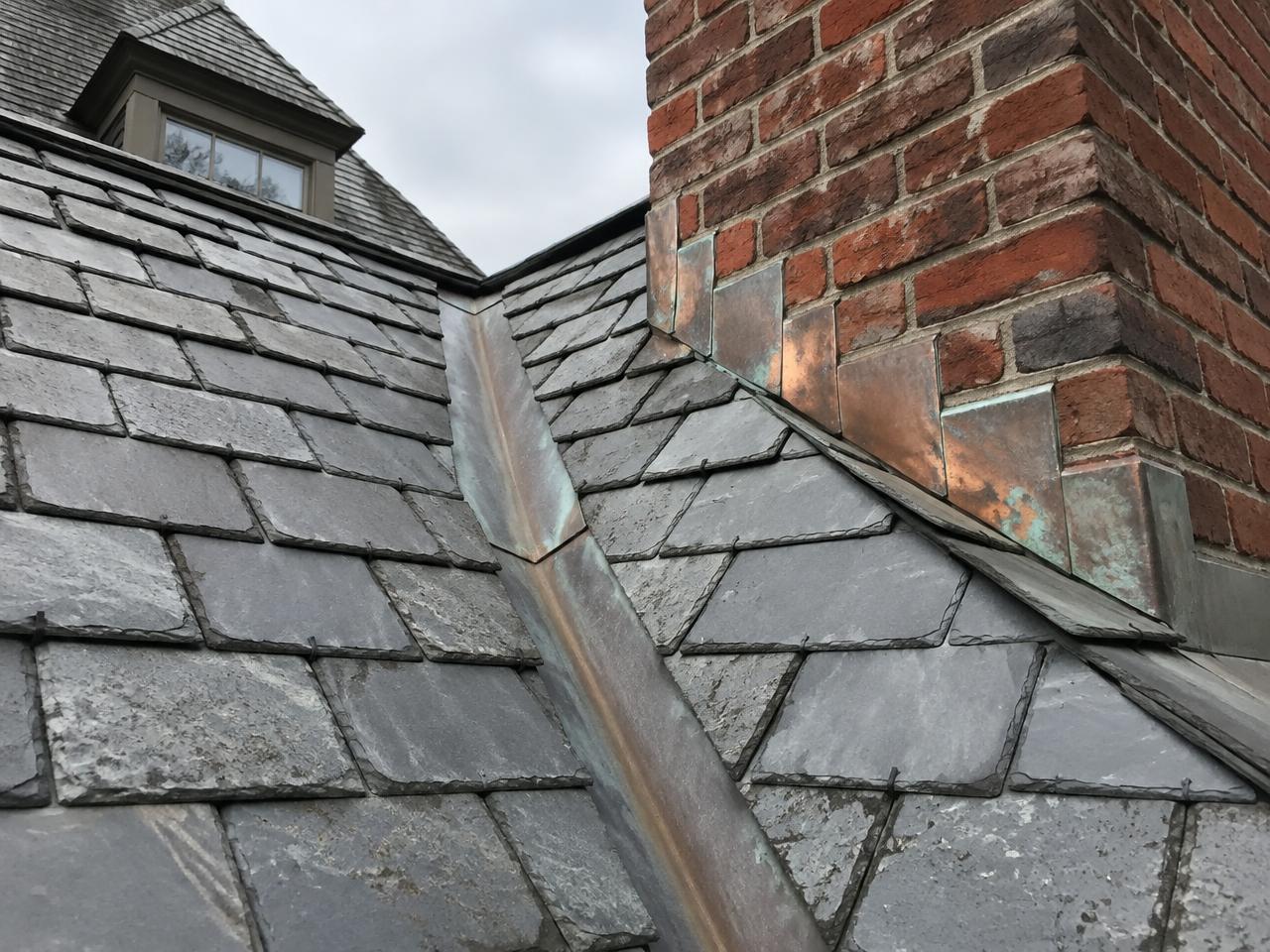
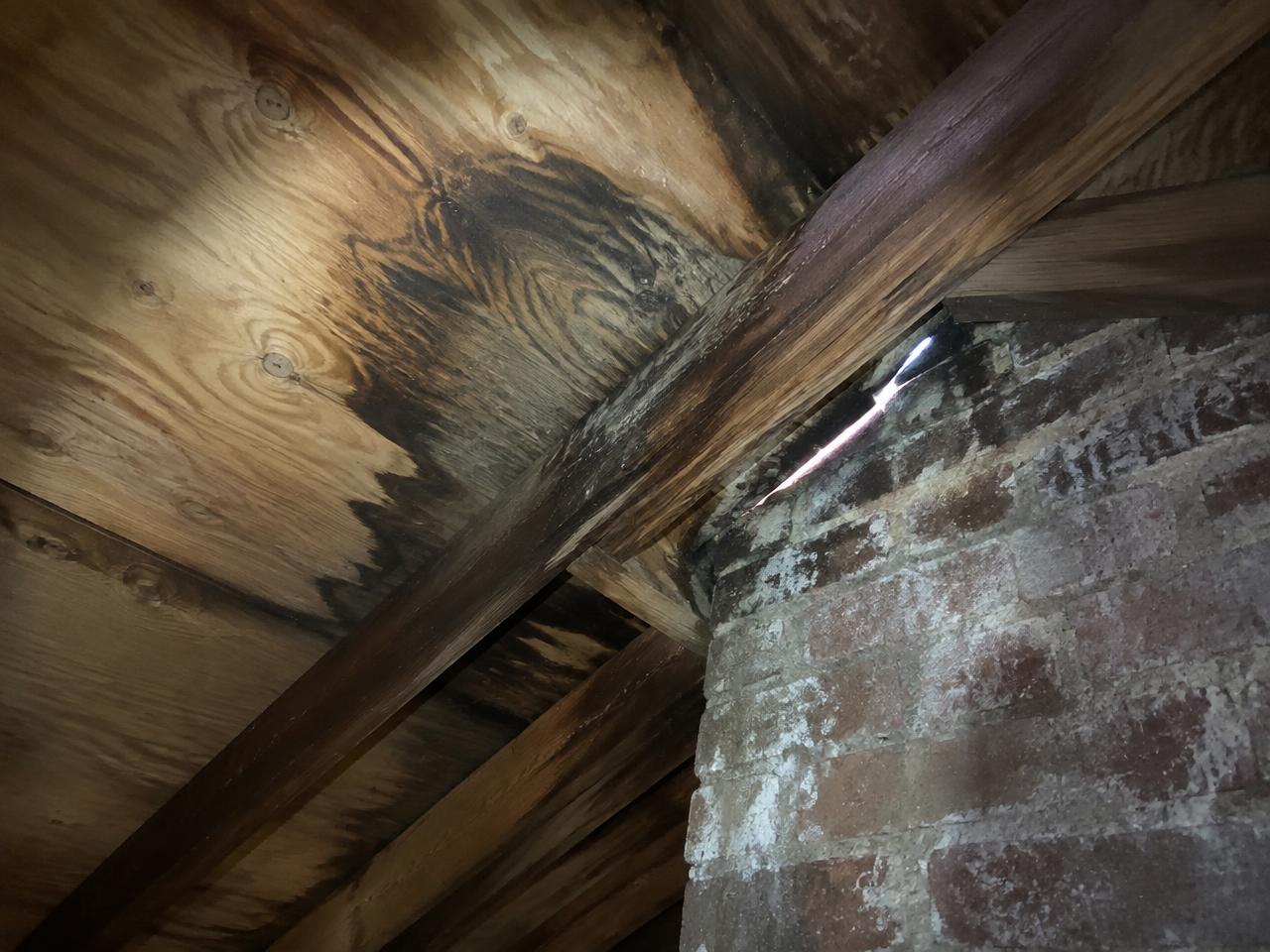
The pictures here show what chimney flashing and chimney leaks look like. They are examples of the work described, not photos of a named customer's home.
What the inspection checks
- 1. Inside, at the stain
- We look at where the water shows up and how far it has spread. The stain tells us which side of the chimney to check first.
- 2. In the attic when we can get there
- Wet rafters, stained decking or daylight next to the brick point right at the opening. Please clear a path to the attic hatch before the visit.
- 3. At the chimney on the roof
- Step flashing, counterflashing, the mortar joints, the crown, the cap, and the shingles on the low side where debris collects.
- 4. The wood underneath
- We press the deck around the chimney. Soft wood means water has been getting in for a while, and that changes the repair.
- 5. You get the answer in person
- You see the photos, hear whether this is roofing work, masonry work or both, and get the price in writing.
What the repair can involve
- New step and counterflashing
- Shingles come back on the chimney side, new metal is laced in row by row, and the counterflashing is cut into the mortar joint and sealed. This is the repair most chimney leaks need.
- Repointing the joints
- Washed-out mortar is ground out and packed with fresh mortar. On some chimneys a mason does this part, and we say so straight instead of pretending it is a roofing job.
- Crown repair and a rain cap
- A cracked crown gets patched or rebuilt, and a cap keeps rain and animals out of the flue.
- Building a cricket
- On a wide chimney we frame and flash a small peak behind it so water goes around instead of sitting there.
- Deck and plaster repair
- If the wood under the shingles is rotted, it gets cut out and replaced before the new flashing goes on. Inside plaster and paint are usually a separate trade.
Repair or replace?
A chimney leak by itself almost never means you need a new roof. If the rest of the shingles are sound, this is a repair. It turns into a bigger conversation when the roof is already near the end of its life, or when the deck is soft in several spots, because new flashing on a worn-out roof just moves the problem.
What changes the price
- How tall the chimney is and how hard it is to reach safely
- Whether the counterflashing can be cut into the mortar or the joints need repointing first
- Roof material — slate and tile take longer to open and close than shingles
- Whether any decking under the flashing has rotted
- Whether a cricket has to be framed behind a wide chimney
- Steepness of the slope and whether staging or a lift is needed
We do not post prices we cannot stand behind. The price comes in writing after the roof is looked at.
Questions about chimney leak repair
- Can this be fixed without replacing the whole roof?
- Usually yes. Most chimney leaks are a flashing or mortar repair around the chimney only. The rest of the roof is left alone.
- Is it the roof or the chimney itself?
- Both are possible, and an inspection is what tells you. Water at the metal line points at flashing. Water showing up in dry weather, or a wet spot low inside the fireplace, points at the brick or the crown.
- The leak stopped. Do I still need it looked at?
- Yes. It stopped because the rain stopped. The opening is still there and the wood inside stays wet longer every time.
- Somebody caulked it last year and it leaks again. Why?
- Caulk is a temporary cover, not a flashing. It shrinks, cracks and pulls away from brick. A proper repair uses metal tucked into the masonry.
- Do I need to be home for the inspection?
- Please be there. The roofer needs attic access when the house has it, and you should hear the findings in person and see the photos while you can ask questions.
- Will you do the brickwork too?
- Sometimes the roofing crew handles repointing, and sometimes a mason is the right call. You get told which before anything starts, not after.
What the visit is like
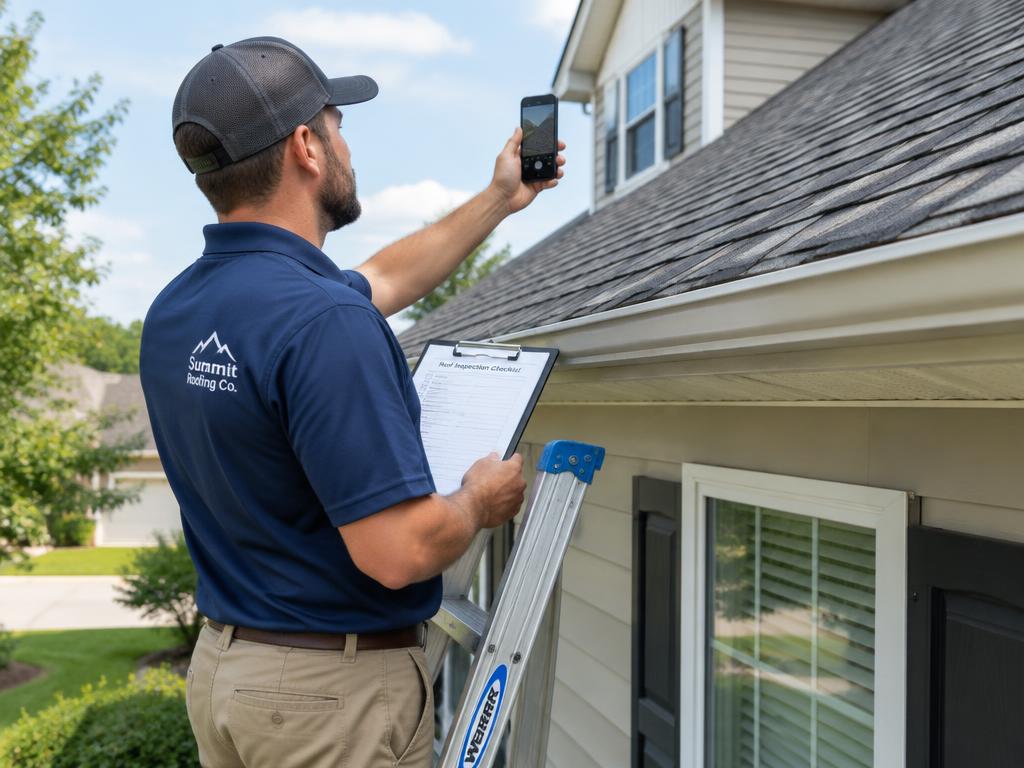
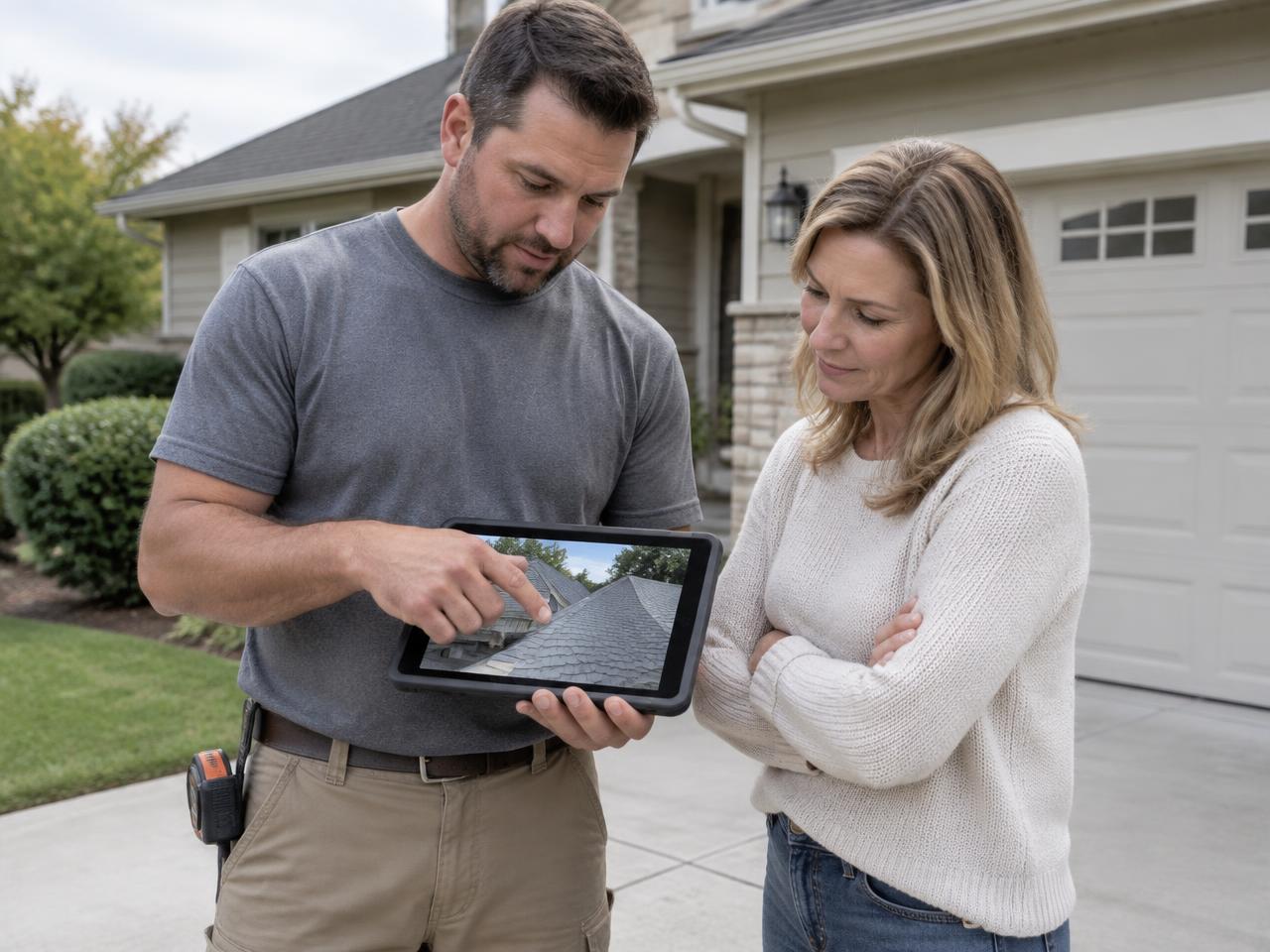
Please be home if you can. The roofer needs attic access when the house has it, and you should hear the findings in person.
More on chimney leak repair
Straight to the pages that deal with this same part of the roof.
Skylight Leaking? It Is Almost Never the Glass
Another leak point people mix up with chimney leak repair.
Leak in a Roof Valley
Another leak point people mix up with chimney leak repair.
Roof Leak Repair
Service page: Leak Repair
Free Roof Inspection
Service page: Free Inspection
Water Stains On The Ceiling: Roof Leak Or Something Else?
Guide
Roof Leaking After Heavy Rain: What To Do Next
Guide
Have it looked at before the next storm
Free inspection, photos of what we find, and a written price. The estimate request already knows you are asking about chimney leak repair.
GET A CHIMNEY LEAK ESTIMATE