Skylight Leaking? It Is Almost Never the Glass
Most skylight leaks start where the skylight meets the roof, not in the glass. Water runs down the shaft and stains the drywall around the opening. Some wet skylights are not even leaking — they are sweating. An inspection tells the two apart.
Signs people notice
- Brown streaks or bubbling paint down the skylight shaft
- Drips at one corner of the frame during heavy rain
- Water only on cold mornings, with none during rain
- Cracked or gummy sealant around the metal edge
- Shingles lifting or debris packed on the uphill side
- Mold spots or a musty smell around the opening
How urgent is it?
Keep an eye on it and get it inspected soon. A slow skylight leak ruins drywall, insulation and the wood curb before it ever drips on the floor. If water pours in during a storm, cover the floor, keep people out from under it, and say it is active when you ask for the visit.
What could be causing it
These are the usual suspects. Which one it is on your house is decided by looking at it, not by reading a list.
- Worn skylight flashing
- A skylight sits in a metal flashing kit. The pieces above, beside and below it have to shed water in order. Old, dented or wrongly layered metal lets water slip behind.
- Sealant used instead of flashing
- Caulk smeared around the frame is a sign of a quick past repair. It looks sealed and still leaks in the next storm.
- A failed factory seal
- On older units the seal between the glass and the frame gives out. You may also see fog between the panes. That is a skylight replacement, not a roof repair.
- Debris damming above the skylight
- Leaves and needles pile up on the uphill side, hold water, and push it under the flashing.
- Condensation, not a leak
- Warm damp indoor air hits cold glass and drips. It shows up on cold, clear mornings and gets better with attic and bath venting.
- Rotted curb or decking
- The wood frame the skylight sits on can rot from years of small leaks. Then no amount of new metal holds.
What this looks like
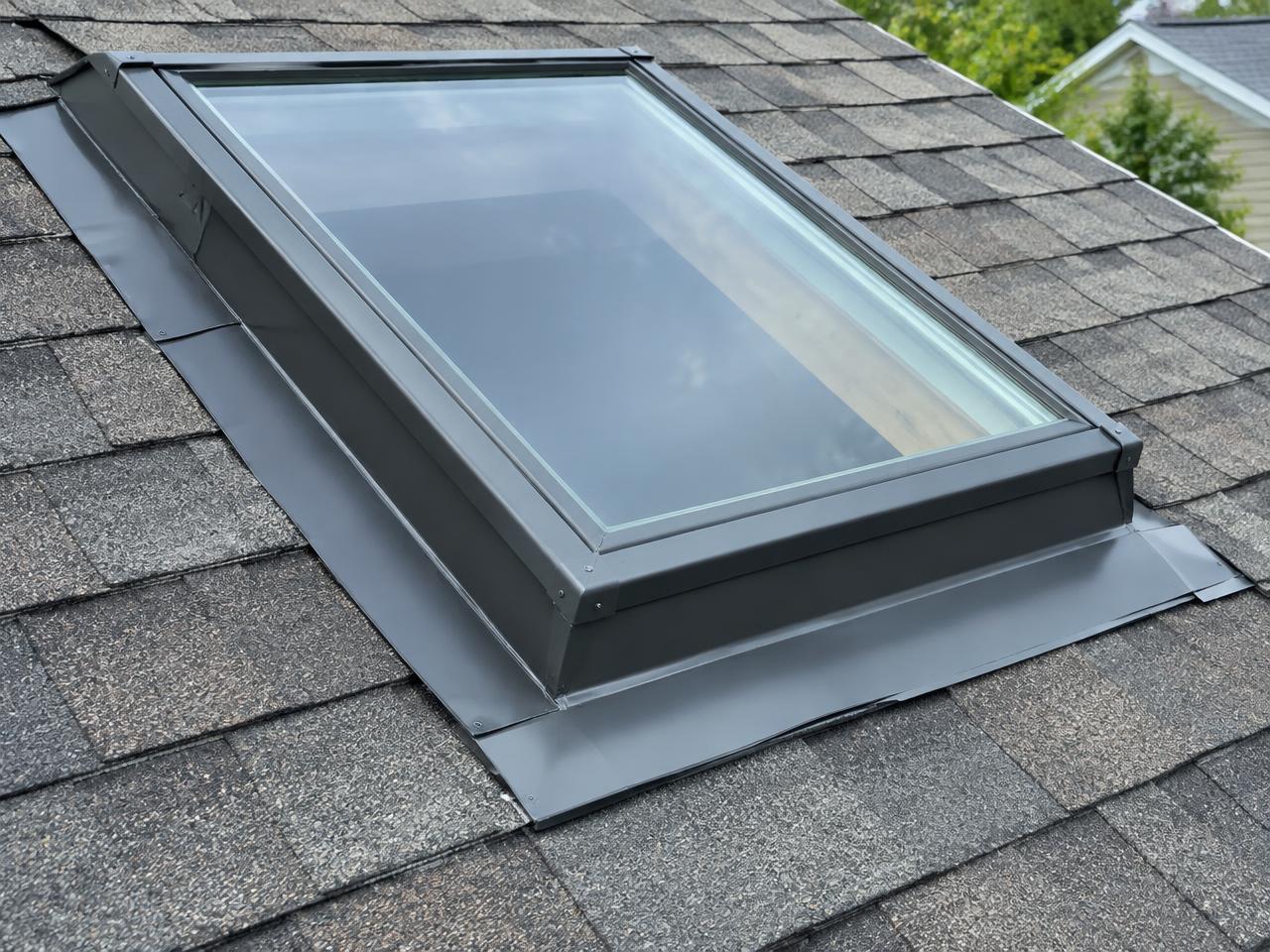
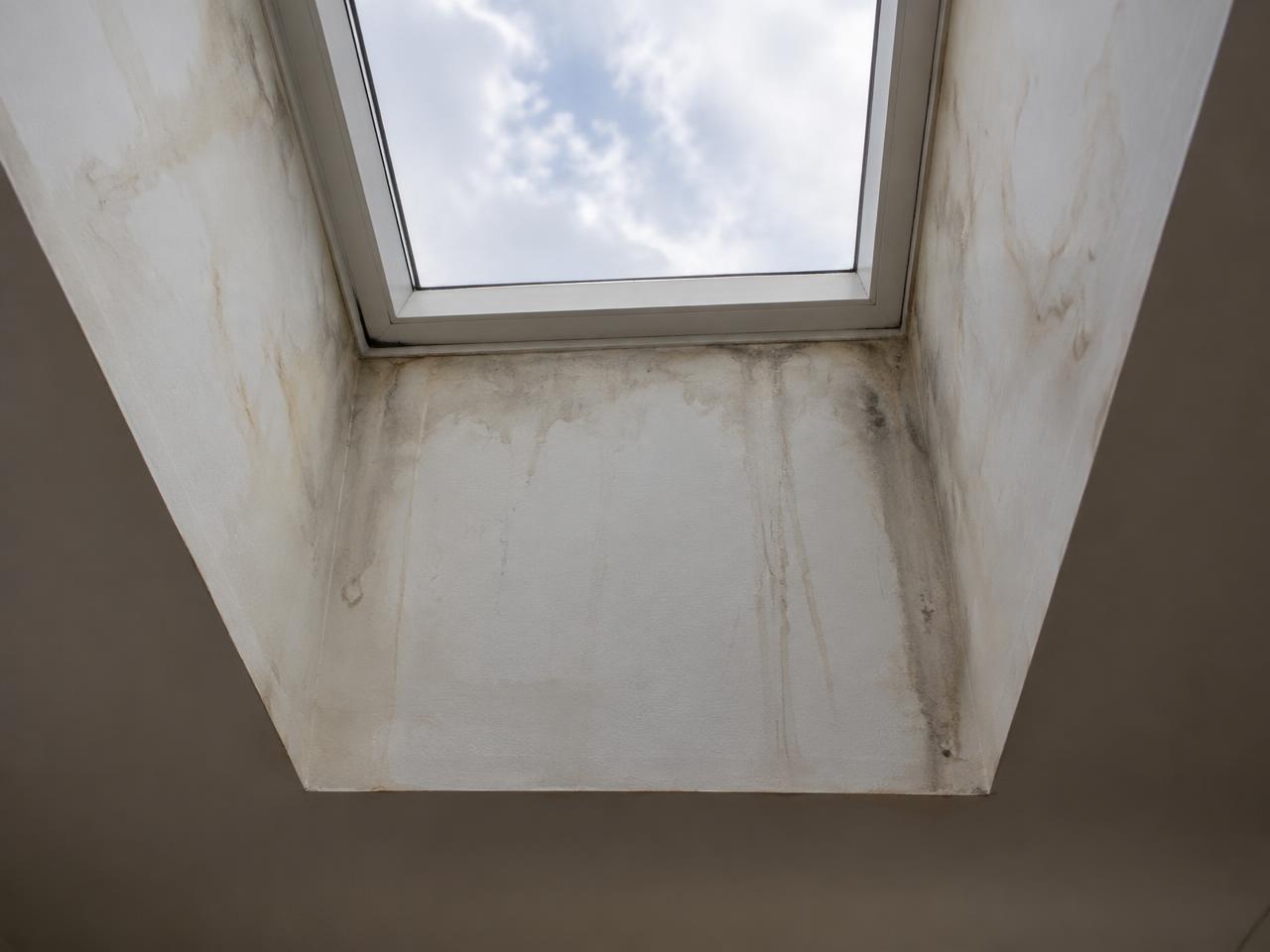
The pictures show skylight flashing and skylight leak staining as examples of this work, not a named customer's home.
What the inspection checks
- 1. When does it get wet?
- Rain-only points at flashing. Cold-morning-only points at condensation. That one answer saves time.
- 2. The shaft and frame inside
- We look at which corner stains first and how far the water has traveled into the drywall.
- 3. The flashing on the roof
- Head, side and base flashing, the shingle layering around it, the sealant, and any debris sitting above the unit.
- 4. The glass unit itself
- Fogging between panes, cracked glass and a failed gasket all mean the unit, not the roof.
- 5. The wood around the opening
- We check the curb and decking for soft spots, because that decides whether the repair is a half day or more.
What the repair can involve
- Reflash the skylight
- Shingles come off around the unit, a correct flashing kit goes in layered the right way, and the shingles go back over it.
- Replace the unit
- When the seal or the glass has failed, a new skylight goes in with new flashing. Curb-mount and deck-mount units are not interchangeable, so it gets measured first.
- Rebuild the curb
- Rotted framing around the opening is cut out and rebuilt before anything new is set.
- Fix the venting
- If it turns out to be condensation, the answer is bath and kitchen fans that vent outside plus proper attic airflow, not roof work.
- Close it up for good
- Some homeowners choose to remove a problem skylight and roof over the hole. That is an option we will price if you ask.
Repair or replace?
If the skylight is under about fifteen years old and the glass is clear, reflashing is usually the answer. If the panes are fogged, the frame is cracked, or the roof itself is being replaced soon, putting in a new unit at the same time costs less than doing it twice.
What changes the price
- Whether the leak is the flashing or the skylight unit
- Size and type of the unit, and whether it opens
- How many shingle rows have to be opened and relaid
- Whether the curb or decking has rotted
- Roof pitch and how the skylight is reached safely
- Interior drywall and paint repair, which is usually a separate trade
We do not post prices we cannot stand behind. The price comes in writing after the roof is looked at.
Questions about skylight leak repair
- Can a skylight be resealed instead of replaced?
- Often yes, if the glass and frame are sound. The real repair is new flashing layered into the shingles, not a bead of sealant.
- Why is it wet with no rain?
- That is usually condensation. Warm indoor moisture meets cold glass. Better bathroom venting and attic airflow fix that, not roof work.
- How long does a skylight get replaced?
- A straightforward unit swap is usually a one-day job when the wood underneath is sound. Rotted framing adds time.
- Should I replace skylights when I replace the roof?
- It is worth pricing. The flashing has to come off anyway, so the labor overlaps. You decide once you see both numbers.
What the visit is like
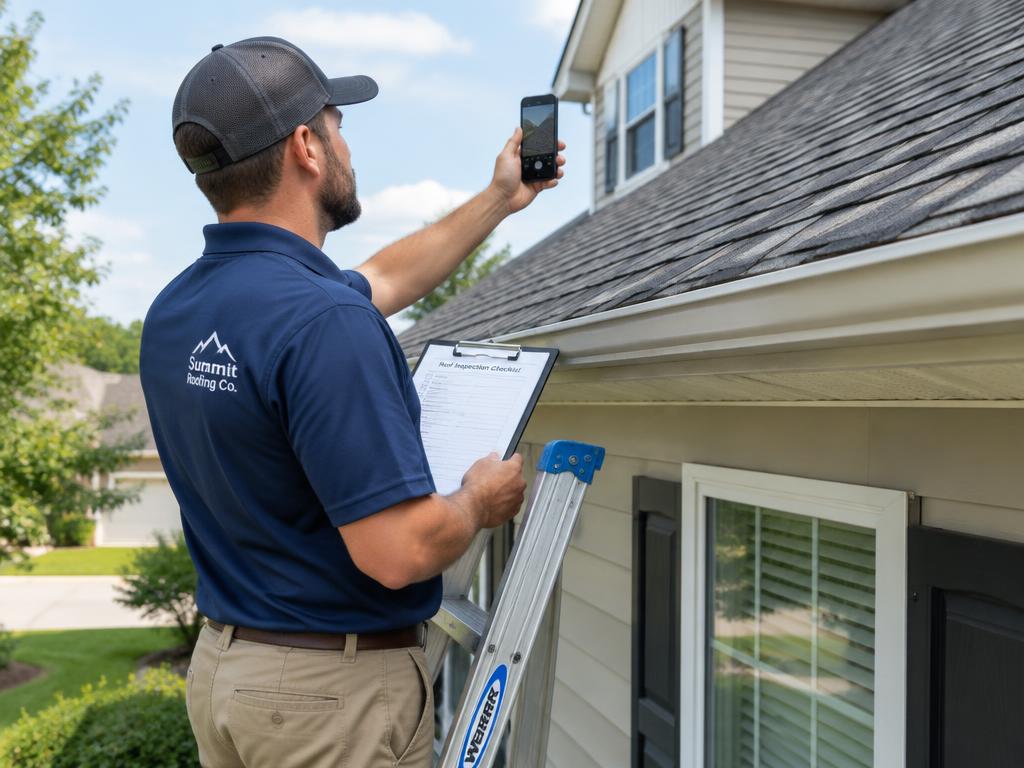

Please be home if you can. The roofer needs attic access when the house has it, and you should hear the findings in person.
More on skylight leak repair
Straight to the pages that deal with this same part of the roof.
Water Coming In Around Your Chimney?
Another leak point people mix up with skylight leak repair.
Leak in a Roof Valley
Another leak point people mix up with skylight leak repair.
Roof Leak Repair
Service page: Leak Repair
Free Roof Inspection
Service page: Free Inspection
Water Stains On The Ceiling: Roof Leak Or Something Else?
Guide
Roof Leaking After Heavy Rain: What To Do Next
Guide
Have it looked at before the next storm
Free inspection, photos of what we find, and a written price. The estimate request already knows you are asking about skylight leak repair.
SCHEDULE A SKYLIGHT LEAK INSPECTION