Flat Roof Leaking
A flat roof is not really flat. It is built to drain slowly across a rubber or plastic sheet. Water only gets in where that sheet is joined, cut or drained: seams, drains, vents, curbs and edges. Finding which one is the whole job.
Signs people notice
- A stain spreading across a ceiling in a wide, soft shape
- Water standing on the roof more than two days after rain
- Bubbles, blisters or soft spongy areas underfoot
- Open or curling seams between sheets
- Cracked patching goo around a vent or a drain
- Mud, silt or a dirt ring showing where water sits
How urgent is it?
Get it looked at soon. Flat roofs hold water instead of shedding it, so a small opening soaks the insulation under the membrane and stays wet. Wet insulation does not dry out, and replacing it is the expensive part.
What could be causing it
These are the usual suspects. Which one it is on your house is decided by looking at it, not by reading a list.
- Open seams
- Sheets are welded or glued together. Those joints are the first thing to age, and an open inch is enough.
- Failed drains and scuppers
- A clogged or loose drain backs water up over the flashing that surrounds it. Then the leak looks like it comes from nowhere.
- Anything sticking through the roof
- Vents, pipes, HVAC curbs and antenna feet all break the sheet. Each one needs its own boot or flashing, and each one can fail.
- Ponding water
- Standing water finds tiny flaws and adds serious weight. Low spots often mean sagging decking or missing tapered insulation.
- Old patch jobs
- Layers of black mastic are a sign somebody chased the leak from the top. Those patches crack and trap water underneath.
- Wall and edge flashing
- Where the flat roof meets a taller wall or the roof edge, the membrane has to turn up and be held. Loose termination bars leak in every sideways rain.
What this looks like
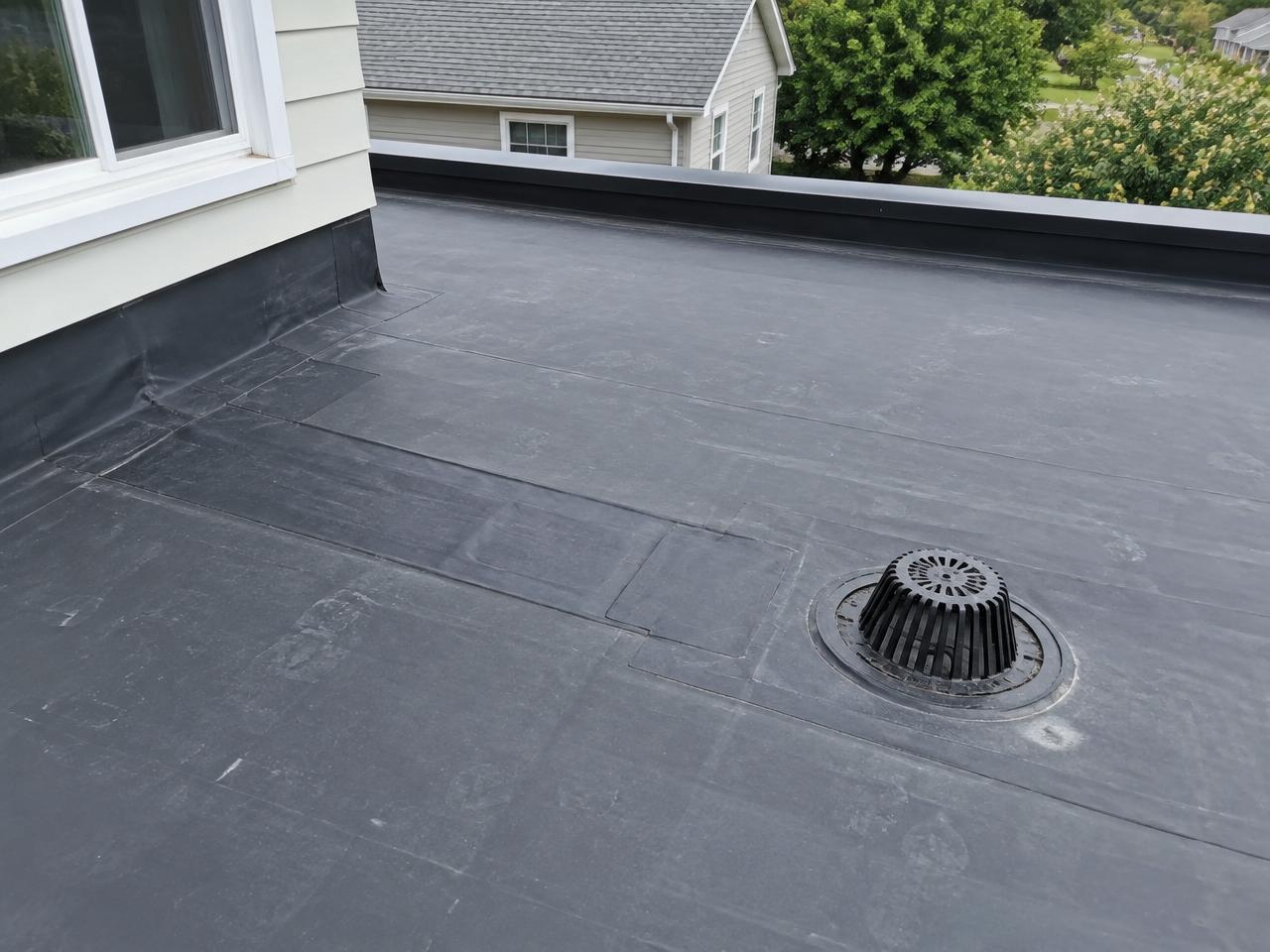
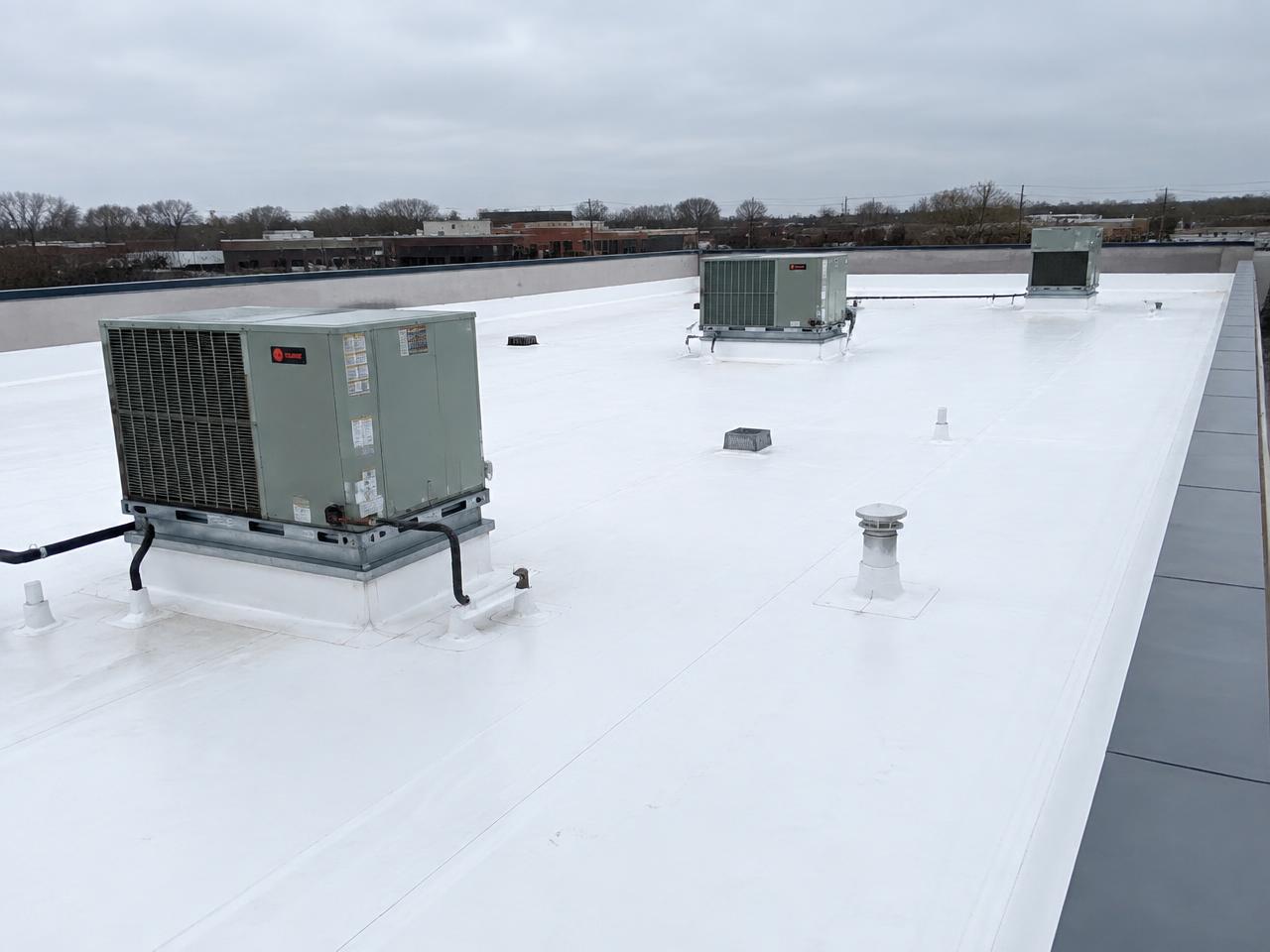
These are example photos of low-slope roof seams, drains and patches, not photos of a named customer's building.
What the inspection checks
- 1. Map the stain inside
- On a flat roof the leak is often several feet away from the stain. We note the location so the search starts in the right area.
- 2. Walk the whole surface
- Every seam, drain, curb, vent and edge gets looked at and photographed, not just the spot above the stain.
- 3. Feel for wet insulation
- Soft, spongy areas mean water is sitting under the membrane. We mark those areas because they change the plan.
- 4. Check drainage
- Drains get checked for blockage and low spots get noted. If water cannot leave, no patch lasts.
- 5. Straight answer on patch or replace
- You see the photos and get told plainly whether this is a repair, a section replacement, or a roof at the end of its life.
What the repair can involve
- Seam repair
- The seam is cleaned and re-welded or covered with matching membrane, bonded to the existing sheet the way the material calls for.
- Drain and penetration work
- Drains get cleared and reflashed. Vents and pipes get new boots. Each penetration is treated as its own detail.
- Cut out wet insulation
- Soaked insulation is cut out, replaced with dry material, and the membrane is patched back over it.
- Section replacement
- When one area is done but the rest is sound, that area gets rebuilt instead of the whole roof.
- Full membrane replacement
- On a roof that has been patched for years, a new membrane with proper tapered insulation and drainage costs less than another two years of patching.
Repair or replace?
Repair when the membrane still has flex, the wet area is small, and drainage works. Replace when the sheet is brittle, several areas are soaked, or water ponds across the roof after every rain. Patching a saturated roof buys weeks, not years.
What changes the price
- Which material is up there: rubber, TPO, modified bitumen or old built-up
- How much wet insulation has to come out
- Number of drains, curbs and pipes that need new flashing
- Whether tapered insulation is needed to fix ponding
- Roof access, especially on rowhomes and commercial buildings
- Whether rooftop equipment has to be lifted or worked around
We do not post prices we cannot stand behind. The price comes in writing after the roof is looked at.
Questions about flat roof leak repair
- Why is the stain nowhere near the wet spot on the roof?
- Water spreads sideways under a flat membrane and drops wherever the deck lets it. That is why the whole surface gets inspected, not one square.
- Can a coating fix my flat roof?
- A coating can extend a sound roof. It will not fix open seams or dry out wet insulation. Anyone selling a coating over soaked insulation is selling you time, not a repair.
- How long does a flat roof last?
- It depends on the material, how it was installed and how well it drains. Standing water shortens every one of them.
- Is ponding water always a problem?
- Water sitting for a day or two after heavy rain happens. Water still there a week later means drainage or the deck needs attention.
What the visit is like
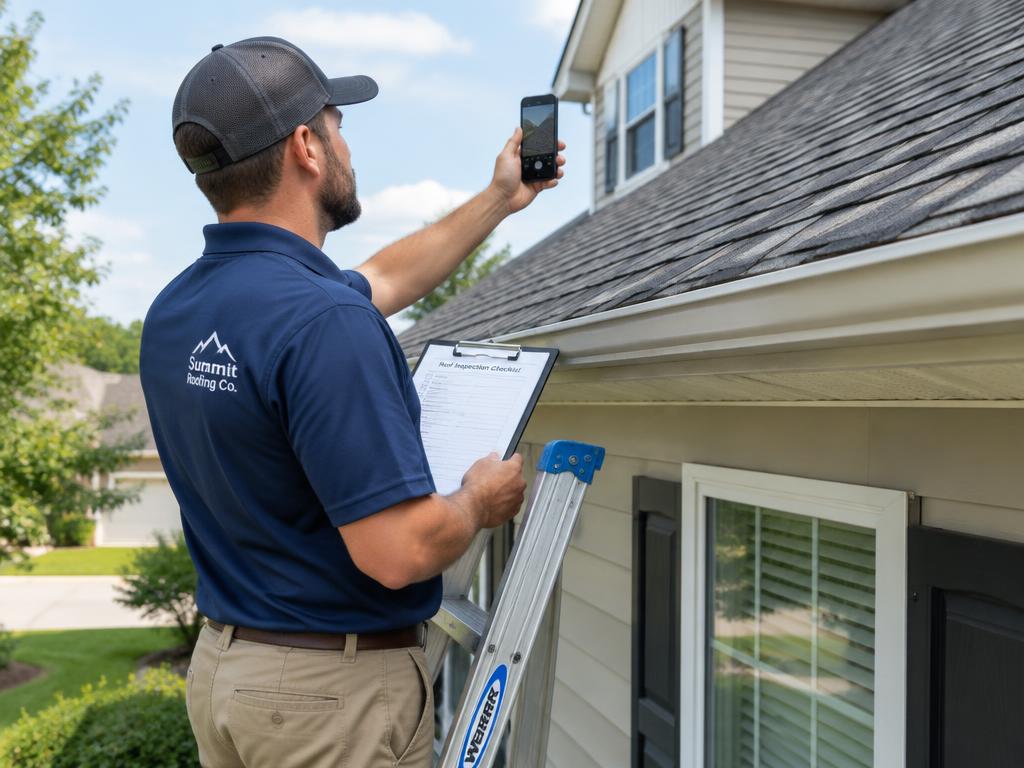

Please be home if you can. The roofer needs attic access when the house has it, and you should hear the findings in person.
More on flat roof leak repair
Straight to the pages that deal with this same part of the roof.
Leak in a Roof Valley
Another leak point people mix up with flat roof leak repair.
Gutters Overflowing or Pulling Away
Another leak point people mix up with flat roof leak repair.
Flat & Low-Slope Roofing
Service page: Flat Roof
Commercial Roofing
Service page: Commercial
Roof Leaking After Heavy Rain: What To Do Next
Guide
Roof Repair Or Replacement: How To Decide
Guide
Have it looked at before the next storm
Free inspection, photos of what we find, and a written price. The estimate request already knows you are asking about flat roof leak repair.
GET A FLAT ROOF LEAK ESTIMATE